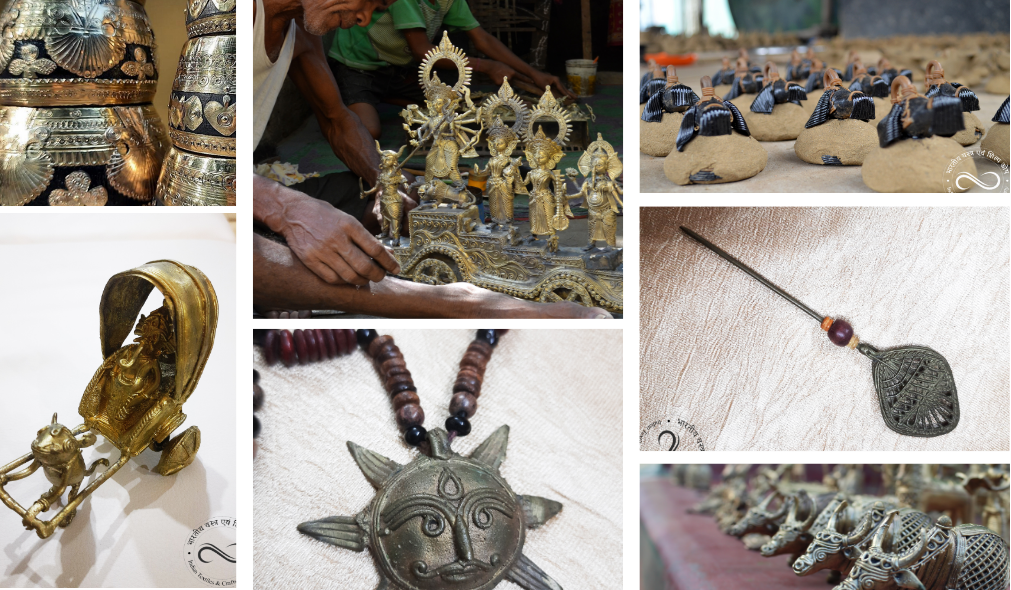
Bengal Dokra
Brass Metal

History
Bengal’s Dhokra craft originates from the Dhokra Damar tribe, known for their mastery of lost-wax casting. This ancient technique dates back over 4,000 years and is linked to the Indus Valley Civilization. The craft flourished in West Bengal, where artisans created intricate deities, lamps, and jewelry for agrarian communities. Today, Dhokra has evolved into a significant home décor art form. Bengal’s metal artisans are also renowned for kansa kitchenware and silver engravings, showcasing a rich artistic heritage.
Raw Materials and Tools
Dhokra artisans use brass, copper, silver, and wax to create detailed sculptures. Mustard oil is mixed with resin and wax to form a pliable material called gala, used for intricate designs. Clay is essential for making inner molds and outer casings. Basic tools include chisels, brushes, and files for refining details. For kansa products, artisans use hammers for beating and casting molds. Silver engraving requires fine chisels and etching tools for detailed craftsmanship.
Process
The process begins by kneading clay to form the core mold. A gala mix of resin, wax, and mustard oil is shaped into fine wires and wrapped around the mold. Details like facial features, jewelry, and clothing are sculpted. The mold is coated with clay, leaving a funnel at the top. When fired, molten metal replaces the wax, creating the final shape. Once cooled, the clay is removed, and the product is cleaned with files and brushes.
Design and Color
Bengal Dhokra features intricate motifs inspired by tribal life, mythology, and nature. Artisans create fine detailing using pulled wax wires, lending a delicate appearance to the figures. The craft maintains a rustic gold-bronze finish from the brass alloy used in casting. Silver engraving in Bhawanipur includes elegant floral, geometric, and Tibetan-inspired motifs. Kansa kitchenware retains a natural metallic sheen, offering a blend of durability and sophistication.
Product Range
Dhokra artisans craft ritualistic idols, animal figurines, and decorative objects. Traditional items include rice measuring bowls, lamps, and jewelry. Today, the craft extends to sculptures, wall décor, and contemporary home accessories.
Additional Information