Moradabad Metal Craft
Other Metal Crafts

History
Moradabad, known as the “Brass City” or “Pital Nagri,” is famed for its exquisite metal craft. The tradition began in the 17th century under Mughal patronage, when Kashmiri artisans settled there. By the 19th century, it became a major exporter of brass and copper items to Europe. Today, Moradabad continues to thrive, combining traditional techniques with modern designs, maintaining its status as a global hub for fine metal craftsmanship.
Raw Materials and Tools
Brass, an alloy of copper, zinc, and lead, is melted in a coal-fired furnace. Sand mixed with a binder forms molds, shaped using wax or wooden patterns. Artisans use chisels, mallets, files, and lathes for detailing. Hammers remove gating; welding tools join parts. Polishing is done with buffing machines and scrubs. Colored lac or enamel adds decorative finishes, preserving traditional craftsmanship and reflecting Moradabad’s rich artistic heritage.
Process
Moradabad’s brassware begins with wax or wooden molds for sand casting. Scrap copper, zinc, and lead are melted with flux, then poured into iron molds to form brass strips. These are cast in sand molds with chemical binders. Once cooled, pieces are cleaned and shaped on a lathe. Artisans engrave intricate designs inspired by nature and Mughal art. Final touches include polishing and embellishment with colored lac or enamel.
Design and Color
Moradabad’s metal craft is known for its durability, detailed designs, and expert artistry. Techniques include appliqué (soldering cut-outs), casting (shaping molten metal), chasing (engraving with tools), enameling (fusing glass-like layers, often with cloisonné), and repoussé (hammering from the back for raised patterns). These traditional methods, blending artistry and utility, have earned Moradabad a global reputation for producing exquisite handcrafted brassware and metal items that reflect its rich cultural heritage.
Product Range
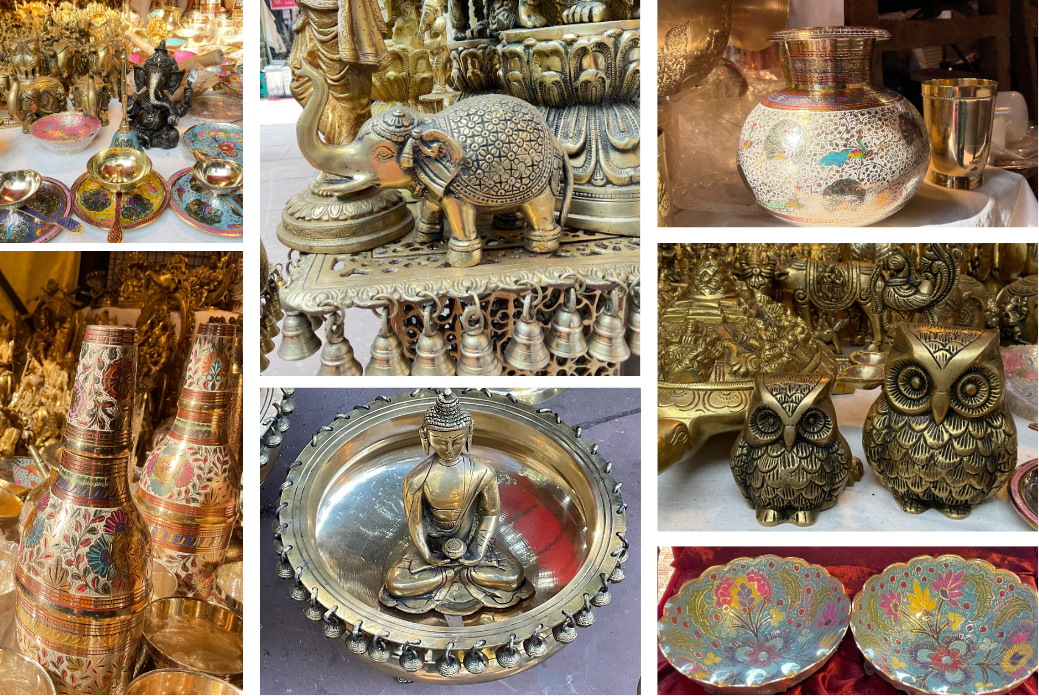
Renowned worldwide, Moradabad's metal crafts are available in a diverse array of forms, including bells, lamps, incense holders, door handles, decorative pieces, figurines, bowls, and planters.
Additional Information