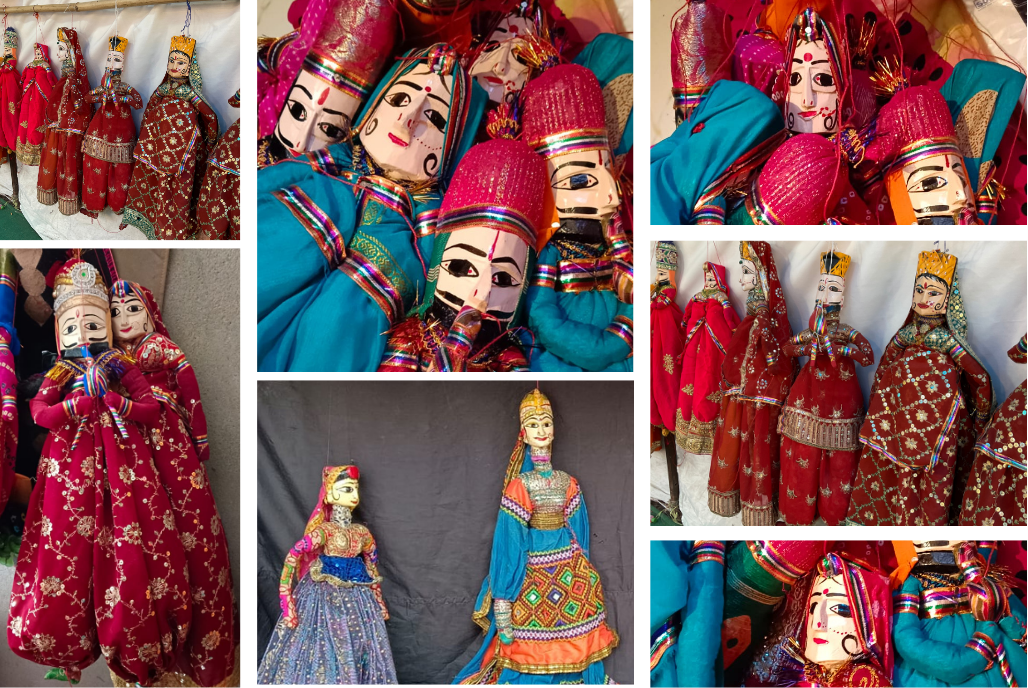
Kathputlis of Rajasthan
Figurines and Toys

History
Kathputlis, or traditional Rajasthani puppets, date back over a thousand years and are believed to have been introduced by the Bhat community. These puppets were used to narrate folk tales, historical events, and moral stories. Their performances, called Kathputli ka Khel, were a form of storytelling, often depicting Rajput bravery, social issues, and mythology. The craft continues to be a vibrant part of Rajasthan’s cultural heritage.
Raw Materials and Tools
Artisans use mango or aak wood for carving, along with cotton cloth, zari, sequins, and beads for decoration. Natural dyes and paints are used for coloring. Essential tools include chisels, knives, paintbrushes, and needles. Strings made from cotton or nylon thread control the puppet’s movement.
Process
The process begins with carving lightweight wood into the puppet’s head and body. The face is hand-painted with expressive eyes and intricate details. The body is draped in traditional Rajasthani fabric with vibrant embroidery. Strings are attached to the head, arms, and body for movement. Artisans then assemble the puppets and test their mobility before they are ready for performances.
Design and Color
Kathputlis are characterized by bold, expressive facial features with exaggerated eyes and mustaches for male puppets. The costumes are colorful, reflecting traditional Rajasthani attire, often adorned with mirror work and embroidery. Bright colors like red, yellow, green, and blue dominate the palette, enhancing their visual appeal.
Product Range
The product range includes puppets, decorative wall hangings, keychains, miniature souvenirs, stringed puppet sets, festive décor items, and performance puppets used in traditional shows.
Additional Information