Mysore Traditional Painting
Folk Painting

History
Mysore Painting is a classical South Indian art form that flourished in Mysore, Karnataka, during the Wodeyar dynasty. It evolved from the Vijayanagar school of painting after the fall of the Vijayanagar Empire in 1565. Raja Wodeyar supported displaced artists and revived the tradition. The art reached its peak during Mummadi Krishnaraja Wodeyar’s reign in the 19th century. His patronage produced elegant and refined paintings, including illustrations in the cultural encyclopedia Sri Tattva-nidhi.
Raw Materials and Tools
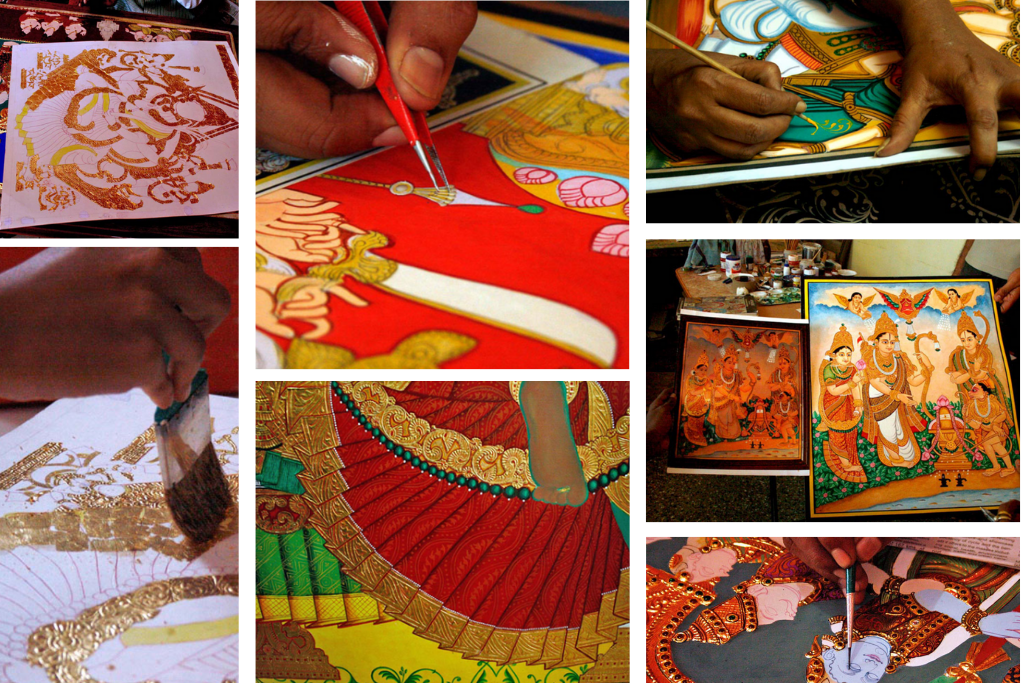
Traditional Mysore paintings used handmade materials like charcoal from tamarind twigs, natural dyes, Arabic gum, and handmade brushes from squirrel, camel, or goat hair. Gold foil and zinc oxide paste were used for embellishments. Earlier, newspapers and maida paste formed the base, while modern artists use mount boards with ivory or cartridge sheets. Tools like ceramic tiles for mixing, coconut shells for holding colors, and pluckers to manage gold foil are still used.
Process
The process begins with a preliminary sketch, followed by applying “gesso paste” (zinc oxide and Arabic gum) to raised areas for detailing. Gold foil is then applied and left to dry for 6–8 hours before brushing or wiping off the excess. Watercolors or synthetic poster paints are used to fill in the rest. Two coats of color are applied, layer by layer. Artists often polish the finished piece using soft stones for a refined look.
Design and Color
Traditional colors included red, green, blue, yellow, black, and white, made from natural sources like flowers and leaves. For example, green was created by fermenting lemon juice in copper containers. Gold foil highlights important elements. Designs often include mythological scenes with emphasized figures outlined in yellow, plain or embossed gold work, and consistent border designs, typically in black and yellow.
Product Range
Mysore paintings are traditionally used for religious and decorative purposes. They depict Hindu deities, mythological narratives, and temple scenes. Today, these artworks are displayed in homes, museums, and cultural exhibitions. Their elegance and use of real gold foil make them luxury items.
Additional Information