Nathdwara Pichhwai Painting
Folk Painting

History
Pichhwai paintings, meaning “hanging at the back,” originated in the 17th century in Nathdwara, Rajasthan. These intricate cloth paintings serve as devotional backdrops for Shreenath ji, a form of Krishna worshipped by the Pushti Marg sect. Created by the Chitere community, including the Adi Gaur, Joshi, and Jangid artists, Pichhwai paintings narrate Krishna’s divine episodes such as Rasleela, Govardhan Puja, and Annakuta.
Raw Materials and Tools
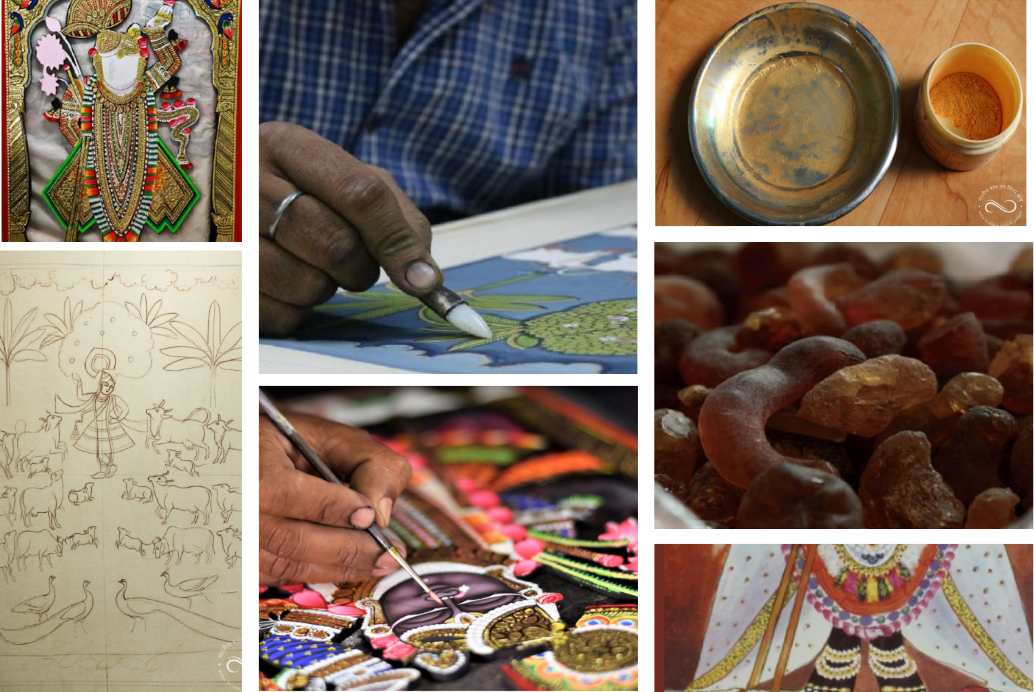
Pichhwai paintings use natural pigments from minerals like indigo, saffron, coal, and zinc, with gold leaf and red lac for richness. Hand-spun cotton fabric is treated with a flour paste. Brushes of squirrel or goat hair provide fine detailing, seashells hold colors, and Gum Arabic binds pigments, while burnishing stones enhance the paintings’ texture and depth.
Process
The creation of a Pichhwai begins with fabric preparation, where cotton cloth is stretched and coated with a white paste (kharia) to form a smooth base. Artists sketch intricate designs in black pigment before filling them with natural dyes mixed with Gum Arabic. The paintings are adorned with ornate gold detailing, and final outlines are redrawn to enhance clarity.
Design and Color
Pichhwai paintings depict Krishna in various seasonal and festive representations. Key motifs include peacocks, lotuses, and cows—symbolizing monsoons, purity, and devotion. Themes revolve around temple rituals, such as Krishna’s adornment (shringaar) for festivals like Janmashtami and Gopashtami.
Product Range
While traditionally used as temple backdrops, Pichhwai paintings now adorn homes in the form of wall hangings, textiles, and decor pieces. Artists also incorporate patchwork and weaving techniques. The fusion of tradition with modern formats has expanded Pichhwai’s reach, preserving its devotional essence while appealing to contemporary aesthetics.
Additional Information