Orissa Pattachitra
Folk Painting

History
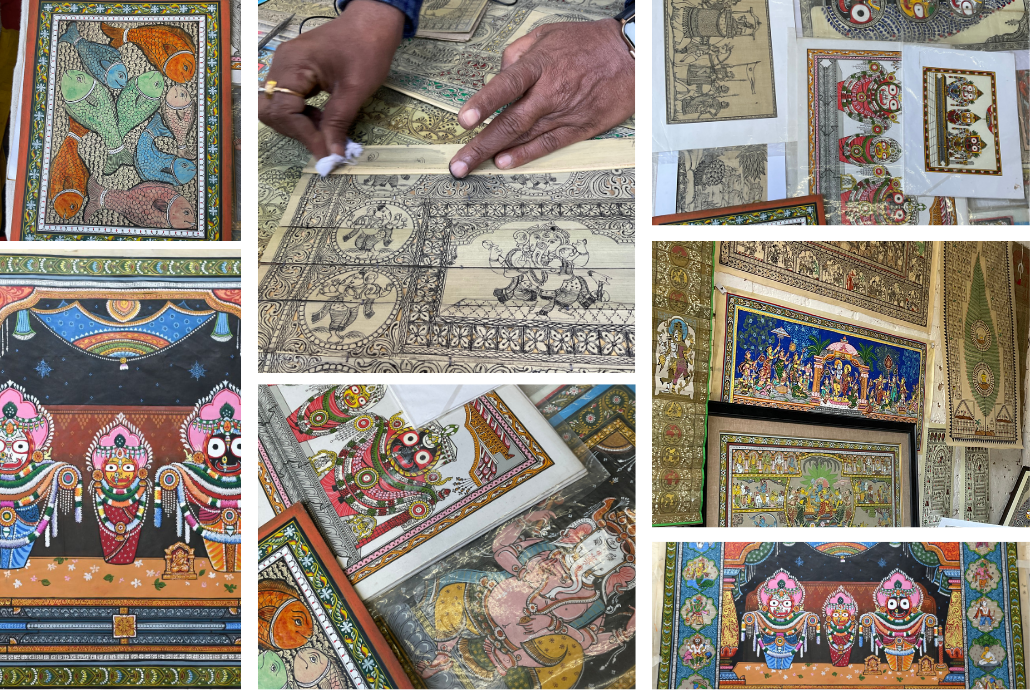
Patachitra, meaning "cloth painting," is a traditional art form from Odisha, deeply connected to religious and mythological themes, particularly the Jagannath temple traditions. Originating in the 12th century, it was created by the Chitrakara community, primarily for temple rituals and storytelling. Today, it remains a significant part of Odisha’s artistic heritage, adapting to contemporary markets and trends.
Raw Materials and Tools
Patachitra paintings use cotton cloth, tamarind seed glue, and chalk powder for a durable canvas. Natural pigments—white from conch shells, yellow from stones, red from geru, black from lamp soot, and blue from minerals—bring the art to life. Animal hair brushes and polishing stones are used, with lacquer applied for a glossy, long-lasting finish.
Process
The canvas is made by layering old cotton cloth with tamarind seed glue, then coated with chalk powder and polished with stones. Artists outline figures using fine white lines, followed by coloring backgrounds in red. Colors are applied for deities with specific hues. Ornaments and garments are detailed, and black outlines define figures; lacquering is done to enhance durability and shine.
Design and Color
Patachitra paintings feature mythological scenes, primarily depicting Lord Jagannath, the Ramayana, and the Mahabharata. Colors follow religious symbolism—goddesses are yellow, gods are white. The art style blends folk and classical elements, emphasizing symmetry, floral borders, and rhythmic detailing. The use of natural pigments ensures vibrant yet earthy tones.
Product Range
Originally, Patachitra was used for religious jatri pattis, Ganjapa playing cards, and dowry boxes. Today, the art is adapted into home decor, textiles, and fashion, including saris, cushion covers, wall plates, clocks, and painted bottles.
Additional Information