Patua Kaam (Jewellery Stringing)
Jewellery

History
Patua Kaam, or Patwegiri, is an ancient jewelry craft dating back to the Vedic period and even the Indus Valley Civilization. It involves weaving gold, silver, pearls, and gems into silk thread using knots or stitches. Derived from the Sanskrit word Pat (to weave), this intricate tradition is now prominently practiced in Mumbai.
Raw Materials and Tools
Raw materials include silk yarn, embroidery thread, nylon threads, gold and silver beads, pearls, gemstones, and decorative beads. The essential tools are a wooden pole, scissors, a fine comb, screws, patti, grip, embroidery needles, threads, and adhesive.
Process
Artisans use a wooden pole fixed to a stone block to weave silk threads into artistic layers. Threads are coiled for thickness, and pearls or beads are added using knotting and braiding techniques. The gonda (silk bead) is formed by looping silk onto a hook and tying it with zari. Adhesive secures the pearls, completing the intricate design.
Design and Color
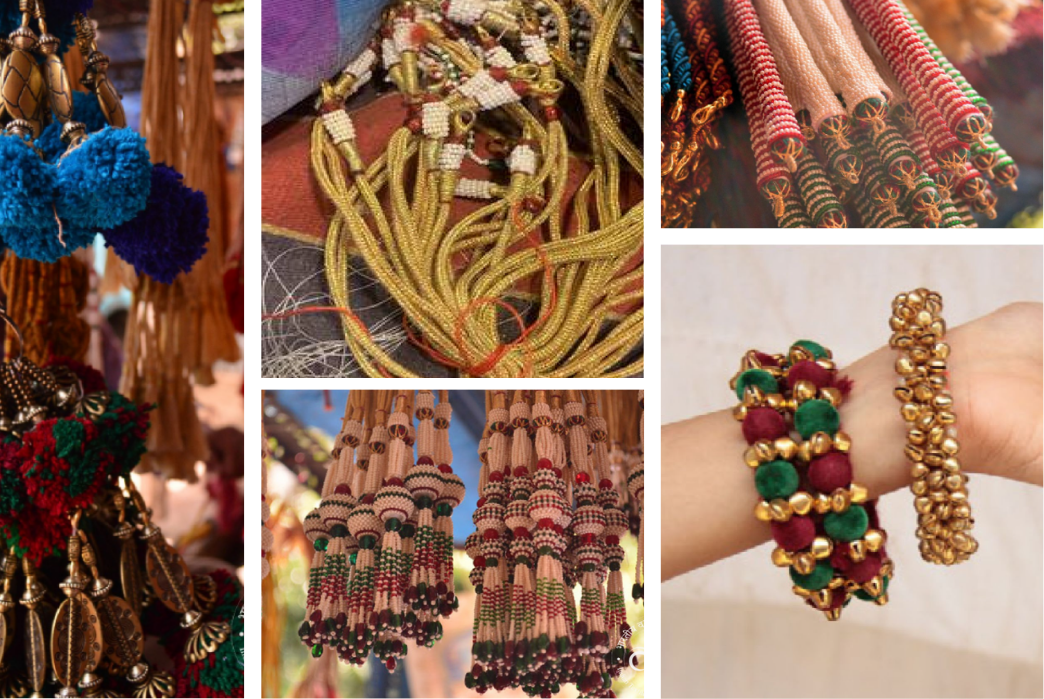
Patwegiri jewelry is known for intricate embroidery, fine threadwork, and vibrant colors. Designs include traditional vajratikas with backstitch embroidery, pearl bracelets, and tricolor gondas. Artisans use red, gold, black, and multicolored threads to create layered patterns. The ornaments are often enhanced with crystal beads, black pearls, and decorative tassels.
Product Range
Patwegiri artisans create various items such as jewellery, gandeh, dore, kamarpatte, kaddore, tait, anant-ananti, and even ornamental horse accessories. These products display the same level of intricate craftsmanship and attention to detail as the jewellery ornaments.
Additional Information