Nettle Fibre
Natural Fibre

History
Himalayan nettle (Girardinia diversifolia) is a sustainable natural fibre sourced from the Himalayas, particularly Uttarakhand, Jammu and Kashmir, Sikkim, and Arunachal Pradesh. Used traditionally, it is now recognized commercially for its strength and breathability. Its hollow fibre structure regulates temperature, making it suitable for both summer and winter textiles. Naturally grown without pesticides, its harvesting has a positive environmental impact on the mountain ecosystem.
Raw Materials and Tools
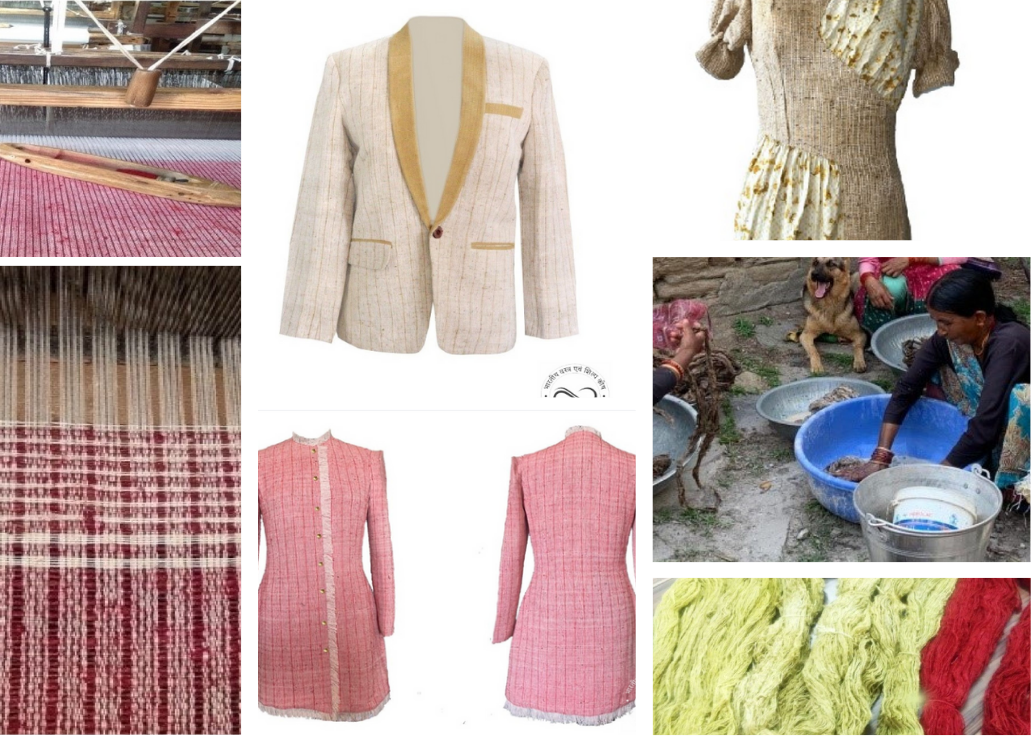
Nettle is harvested by mountain villagers, primarily women, who strip the bast from the stem. The fibre undergoes retting, degumming, and sun drying. It is then cleaned, combed, carded, and handspun using the Bageshwari charkha. Spinning is often done by village women while on the move. The fibre is finally woven into shawls and scarves on traditional back-strap looms, preserving centuries-old craftsmanship while ensuring sustainability.
Process
Natural earthy tones such as beige, brown, and green dominate nettle fibre products. These colors highlight the organic nature of the craft, blending with the Himalayan environment. Traditional dyeing methods using plant-based colors are sometimes employed, reflecting cultural aesthetics and sustainability. The raw fiber’s natural shades signify eco-consciousness and authenticity, appealing to environmentally aware consumers.
Design and Color
Nettle craft incorporates traditional motifs inspired by Himalayan flora, fauna, and geometric patterns. The texture of the fibre lends itself to intricate weaving techniques, producing unique, rustic aesthetics. Carvings and embroidery may be added for embellishment, while the weaving style remains simple yet durable. Traditional designs passed down through generations continue to influence modern adaptations of nettle textiles.
Product Range
Himalayan nettle is woven, knitted, and crocheted into eco-friendly products, including clothing, shawls, bags, and home furnishings. Historically, it was used for fishing nets, ropes, and ceremonial accessories. The fibre's antibacterial properties make it ideal for healthcare and hospitality textiles.
Additional Information