Navalgund Durries
Other Carpet, Rugs & durries

History
Navalgund Durries, a GI-registered craft from Karnataka, are renowned for their vibrant geometric designs and durability. Traditionally woven on pit looms using cotton or wool, the craft has been passed down through generations, with daughters-in-law learning the art upon marriage. The unique "punja" weaving technique sets them apart. Recognized by UNESCO as an endangered intangible cultural heritage, Navalgund Durries remain significant in contemporary home décor, emphasizing sustainability with their use of natural materials.
Raw Materials and Tools
Cotton, wool; khaday magga (vertical loom), punja (beater), and wooden shuttles.
Process
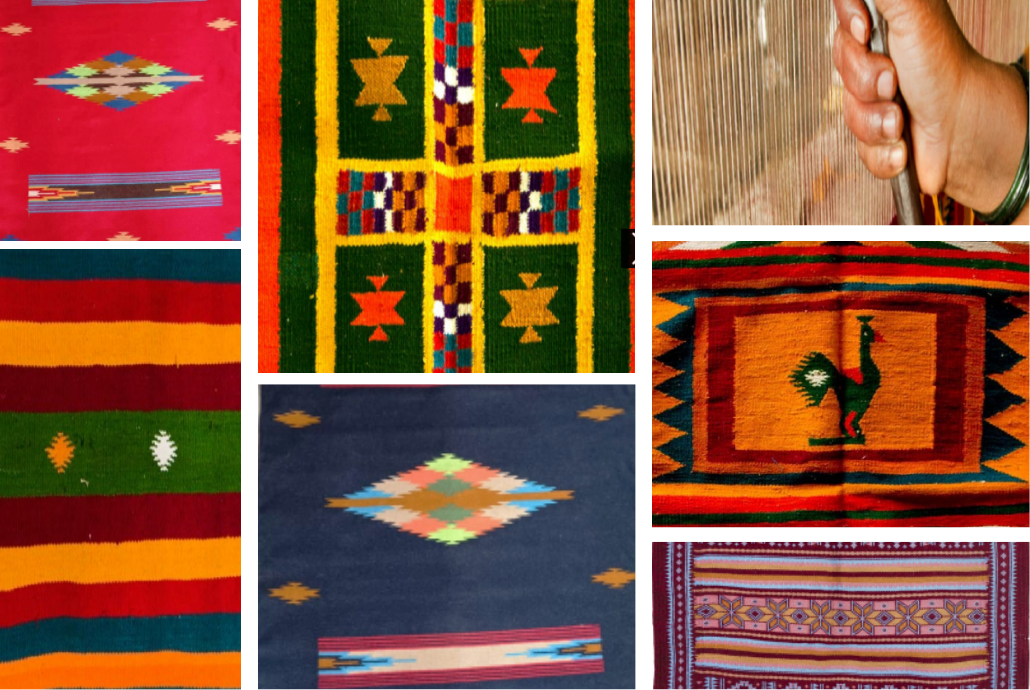
In Navalgund, durries like jamkhan (floor coverings) and jainamaaz (prayer mats) are handwoven by Muslim Sheikh women on a khaday magga, a vertical loom. Two weavers sit opposite each other, using the punja technique to create intricate patterns. Some artisans also weave sofa mats, table mats, and guddar, a striped protective covering for grains, on ground looms.
Design and Color
The warp is mostly made of white cotton yarn, while the weft yarns are bright colours such as yellow, red, blue, and green. Various motifs are represented, including choukhas, which are dice game boards, as well as mor (peacocks), charmor (peacock motifs in four corners), and geometric designs.
Product Range
Navalgund Durries are versatile, serving as floor coverings, prayer mats, wall hangings, table mats, cushion covers, and accessories like bags and pouches. Known for their intricate geometric designs and vibrant colors, they seamlessly blend tradition with modern decor, keeping the craft alive through contemporary adaptations in patterns and applications.
Additional Information