Gharchola Craft
Other Textiles Based Craft

History
The Gharchola sari, a blend of weaving and tie-dye, has been a vital part of Gujarati weddings for centuries. Originating in Khambat, it was initially woven by traditional artisans and later dyed in Jamnagar, known for its ideal water quality for deep red hues. Historically, Khatri artisans specialized in this craft.
Raw Materials and Tools
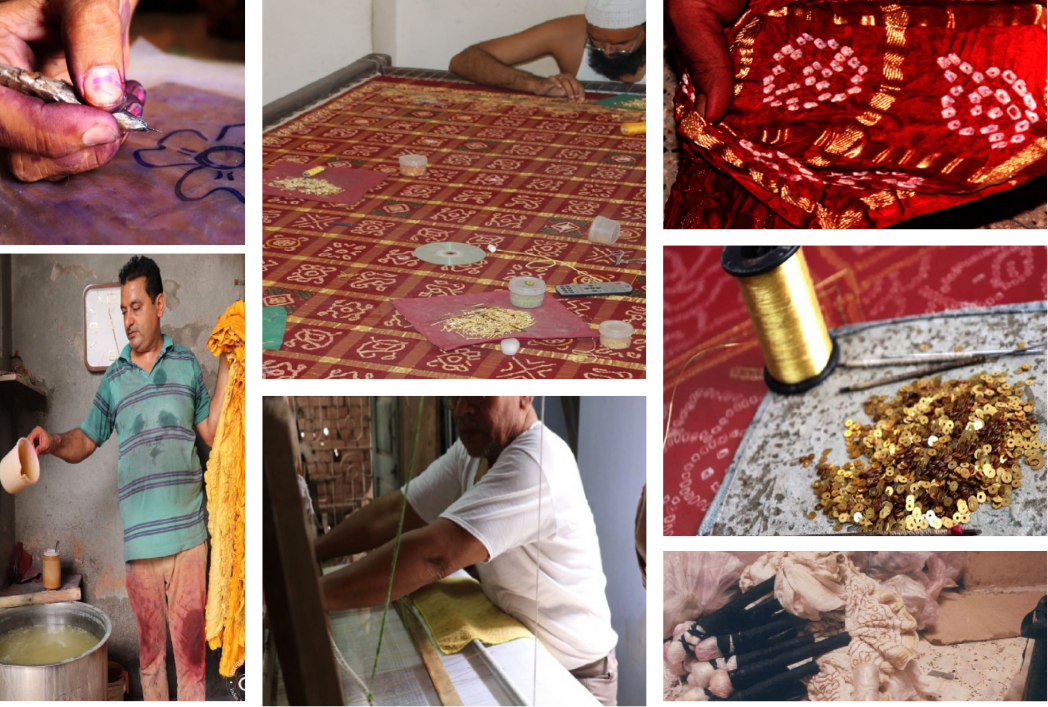
Gharchola saris are woven from silk, primarily gajji silk, with zari threads forming the iconic checkered patterns. Cotton thread is used for tying the bandhani motifs before dyeing. Tools include handlooms for weaving, dyeing vats for resist-dyeing, and needlework tools for intricate embroidery. Traditional artisans continue to use natural dyes, ensuring rich, vibrant colors that define the authenticity of Gharchola saris.
Process
Artisans weave zari threads into silk fabric, creating a grid or checkered pattern. Each square is tied and dyed using the bandhani technique, followed by a second round of dyeing in red, maroon, or scarlet shades. Traditional Gharcholas have a uniform color, while modern adaptations include separately woven green pallus. The sari is then hand-embroidered, enhancing the design. The entire process requires meticulous skill, making each Gharchola unique.
Design and Color
Gharchola saris feature distinct checkered grids, traditionally in 9, 12, or 52-square patterns. The motifs include parrots, peacocks, elephants, floral (phulwari), and hunting scenes (shikari). Classic Gharcholas are monochrome with zari embellishments, while modern designs include multi-colored pallus. Red, maroon, and scarlet dominate the traditional palette, signifying auspiciousness, with green added in contemporary versions for contrast and variety.
Product Range
While originally a bridal sari, Gharchola has expanded into modern apparel and accessories. Men’s clothing, dupattas, stoles, and home décor items now feature Gharchola designs.
Additional Information