Pashmina Wool of Ladakh
Other Textiles Based Craft

History
Pashmina’s history spans centuries, linking Tibet, Ladakh, and Kashmir through trade. A 1684 agreement granted Kashmir exclusive rights to Tibetan pashmina, which was exported via Ladakh until 1959. British India’s interest led Warren Hastings to send George Bogle to Tibet, while Lord Dalhousie planned a Hindustan–Tibet highway. Mughal Emperor Akbar promoted the shawl industry, and Kashmiri shawls, prized for their luxury, even reached Rome during the Mahabharata era, adorning Caesar’s court.
Raw Materials and Tools
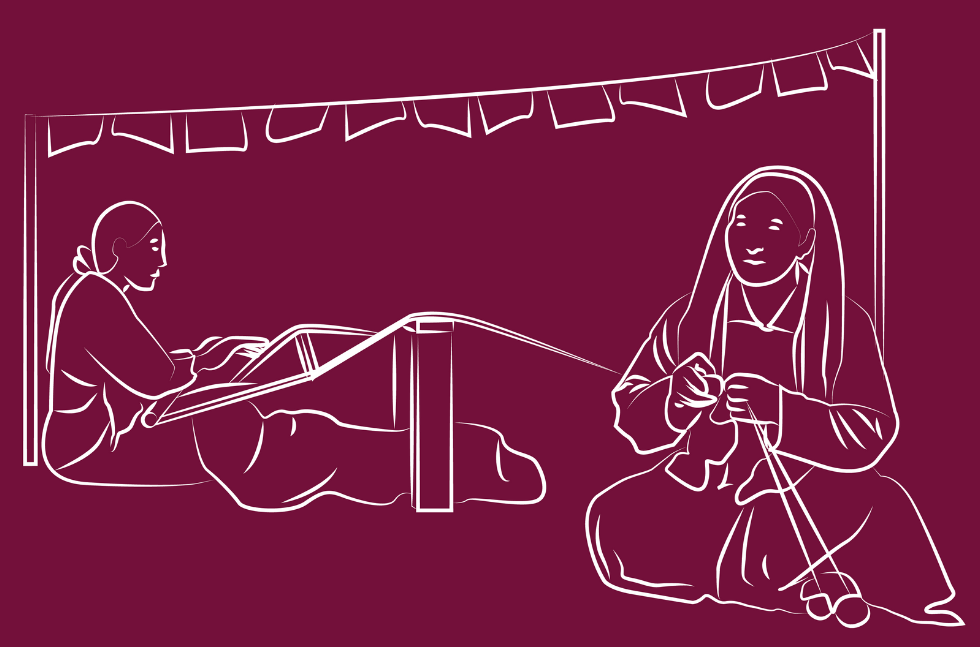
Pashmina production relies on wool from male and female goats, with males yielding up to 300 grams and females 200–250 grams. This fine undercoat, or pashm, provides winter insulation and is combed out as the season ends. Historically, wooden or horn combs were used, while modern artisans use steel combs. The fibers are hand-carded, spun into yarn using wooden spindles, and manually warped around iron rods before being mounted on a loom for weaving.
Process
Pashmina is harvested from goats in June, with men leading the process and women assisting. During winter, the pashm lies close to the skin for insulation and rises afterward for easy combing. Male goats produce up to 300 grams, females 200–250 grams. After combing, the fibers are cleaned, hand-carded, sun-dried, and spun into yarn using wooden spindles. The delicate yarn is manually warped around iron rods before being mounted on a loom for weaving.
Design and Color
Ladakhi pashminas typically lack intricate designs or motifs. Instead, the weavers focus on various twill weaves, such as herringbone twill, pointed twill, plain twill, and basket twill. The shawls produced in the Ladakh region are generally loosely woven, with distinct weaves that create beautiful patterns as decorative elements. Most of the Pashmina Shawls have only one colour throughout.
Product Range
The product range includes pure pashmina, pure ring pashminas, silk blended pashminas, two tone pashminas, ombre/gradient pashminas, pashmina with furs, beaded pashmina, aristocrat pashmina and brides pashmina.
Additional Information