Shengao Making Craft
Other Textiles Based Craft

History
Manipur's Kauna Grass, grown in Imphal’s wetlands, is a versatile, export-worthy crop traditionally used by the Meitei community to make hats, baskets, and hampers. Basket weaving is a gender-inclusive craft, with women often leading the work to support their families through creative, income-generating skills.
Raw Materials and Tools
The raw materials for Kauna baskets and mats include Kauna grass, jute string, natural dyes, and cow dung for waterproofing. The grass is dried and woven into intricate patterns. Tools used in the process include wooden or tin molds created by carpenters to shape the baskets, simple weaving tools for positioning strands, and smoking chambers for sealing the baskets. The artisans, primarily women, ensure durability through tight weaving, making the products sturdy for storage and measuring purposes.
Process
The process of making Kauna baskets and mats begins with farmers growing and harvesting tall grass, which is dried thoroughly to prevent mold. The grass is woven into a base, then interwoven to form the structure. Carpentry molds help shape baskets, while mats are woven flat and secured with jute string. Women artisans, trained by master weavers, ensure tight weaving for durability. Finished baskets are coated with cow dung and smoked for waterproofing, mainly for grain storage and measuring.
Design and Color
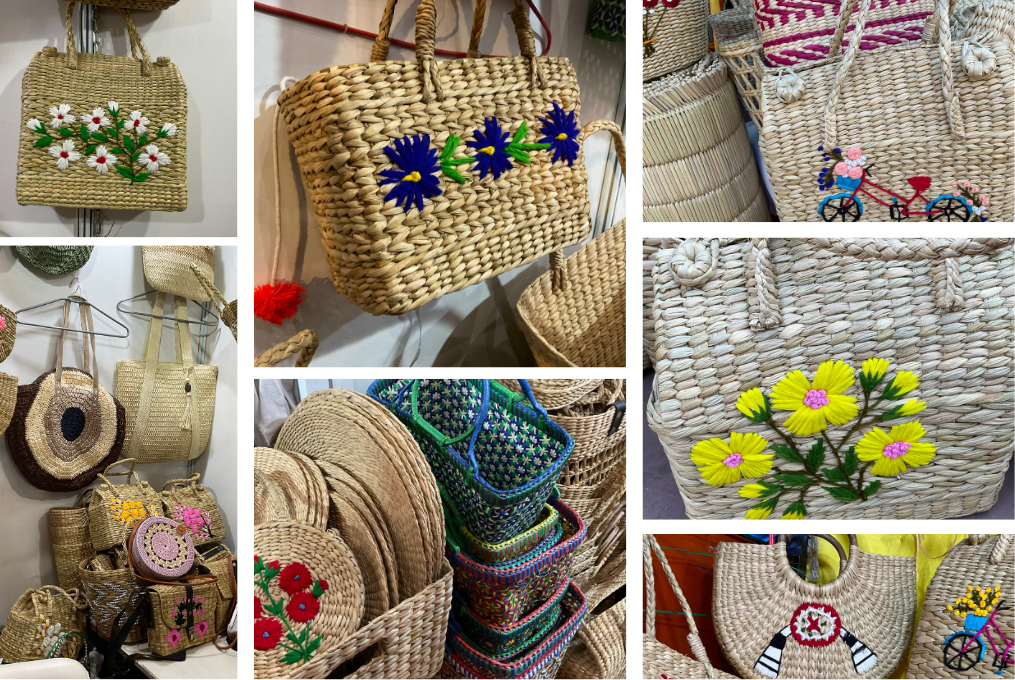
Kauna items typically feature simple designs, often enhanced with a splash of color when intended for ceremonial gifts. Kauna baskets can exhibit exceptionally fine, durable, and intricate weaves, which are further reinforced with additional strips for added strength. It is mostly in the natural colour of the grass, however, in recent times, artisans have started experimenting with colours and have started adding natural dyes to add bright colours.
Product Range
The most popular product among local Manipuris are the mats, mattresses and cushions which serve as furniture in a room where people do most socializing, working and eating while seated on the floor in the traditional style.
Additional Information