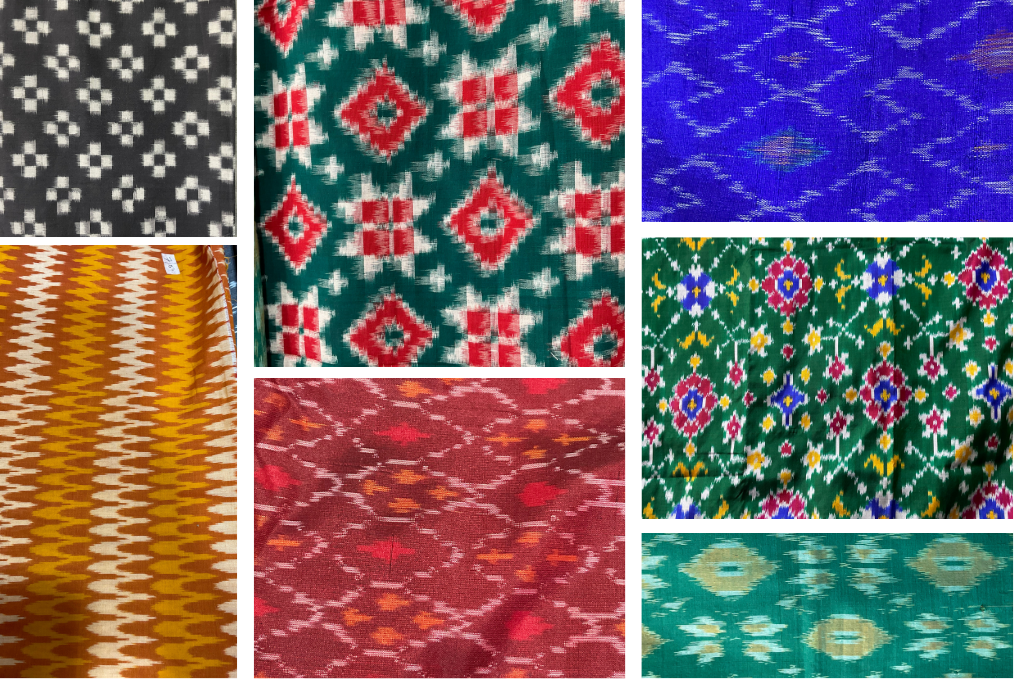
Pochampally Ikat
Other Textiles Based Craft

History
Pochampally Ikat, originating in Telangana, is a centuries-old yarn tie-resist dyeing textile art. Depicted in Ajanta cave paintings, it showcases geometric motifs. Despite modernization challenges, it thrives due to government initiatives, a Geographical Indication tag, and eco-friendly appeal. It represents Telangana’s cultural identity and contributes significantly to sustainable fashion markets.
Raw Materials and Tools
Materials include silk and cotton yarn, natural dyes like alizarin and indigo, cow dung, and castor oil for mordanting. Tools involve pit looms, frame looms, and strings for tying yarn bundles. Traditional practices ensure vibrant patterns and durability, maintaining Pochampally Ikat's uniqueness.
Process
Artisans tie yarns in warp or weft directions, ensuring precision for motifs like chevrons or grids. Threads are repeatedly dyed, leaving tied sections undyed. The dyed yarns are warped and woven on looms. Double ikat requires synchronization between warp and weft, highlighting artisans' meticulous craftsmanship.
Design and Color
Motifs include jasmine (mallepulu), star (nakshatram), and diamond (kaya). Colors like red, indigo, and black dominate, derived from natural sources. Designs blend geometric and floral themes, juxtaposing dyed patterns with solid colors, reinforcing visual and cultural significance.
Product Range
Initially Telia Rumals, Ikats now include saris, home textiles, and modern lifestyle items. Their geometric elegance adapts to global demands, showcasing innovation while preserving Telangana’s textile heritage. Contemporary diversification enhances their artistic appeal and practical utility.