Jamdani
Other Textiles Based Craft

History
Jamdani weaving originated in Bengal, particularly Dhaka, and flourished under the Mughals and Nawabs. This intricate craft involves extra-weft weaving to create fine geometric motifs. After India's independence, it declined due to reduced patronage and weaver migration. However, it still thrives in regions like Phulia, Katwa, and Kalna in West Bengal.
Raw Materials and Tools
Jamdani weaving uses fine cotton (60s–150s count) or silk yarns, with thicker threads for motifs. Gold or silver zari may be added for shine. Tools include a pit loom, needles for extra weft insertion, a shuttle for the weft, and rice starch for warp sizing.
Process
Jamdani saris are woven on pit looms using fine cotton or silk yarns. The extra weft is inserted manually after each plain weave to create intricate motifs. The warp is sized with rice starch for smooth weaving. Skilled artisans meticulously craft the designs, and once completed, the sari is rolled, taken off the loom, and prepared for sale.
Design and Color
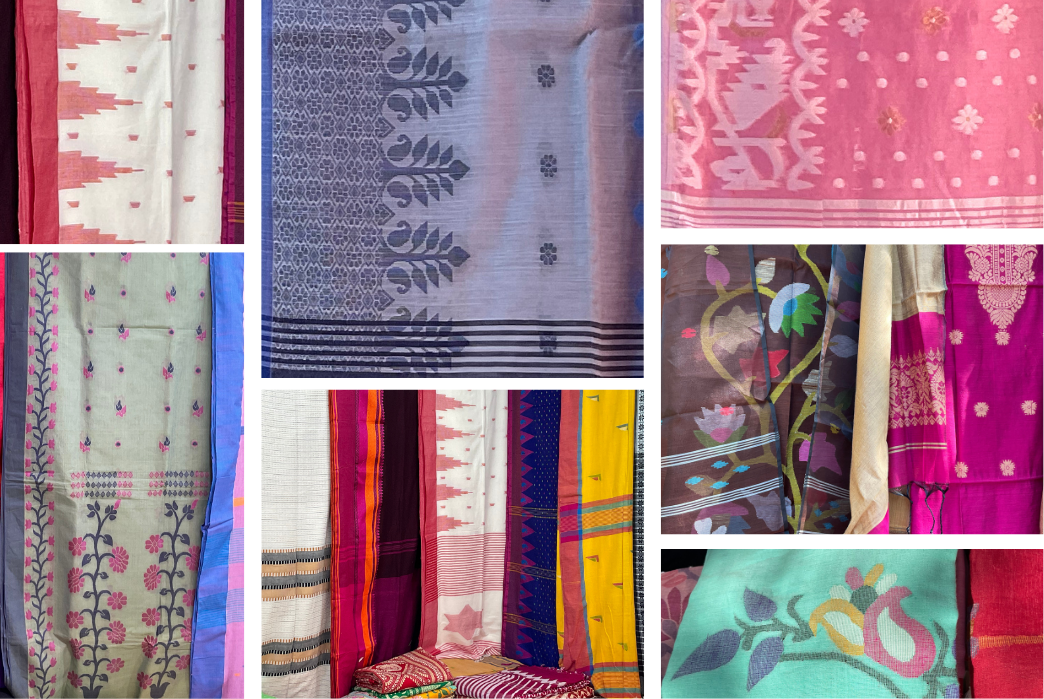
One of the distinctive features of jamdani saris is their geometric motifs, which are almost pixelated representations of elements from Persian iconography or local flora and fauna. Common motifs include the Indian kalka or paisley motifs, rows of floral vines, and jamdani's namesake motif, the wine cup. The motifs are unique and often showcase a blend of inspirations from various sources.
Product Range
Jamdani weaving primarily produces saris known for their fine texture and intricate patterns. Traditionally in white-on-white or indigo, modern versions feature diverse colors and motifs. In Uppada, Andhra Pradesh, jamdani techniques create larger floral designs on silk with zari, often incorporating vibrant hues and pictorial elements for a contemporary appeal.
Additional Information